THREE:Undaunted by this display of prelatical bigotry, Lord Stanhope immediately gave notice of a Bill to prevent a tyrannical exercise of severity towards Quakers, whose principles did not permit them to pay tithes, church-rates, or Easter offerings; this he did on the 3rd of July of the same year. By the 7 and 8 William III. two justices of peace could order a distress on a Quaker for tithes under the value of ten pounds; and by 1 George I. this power was extended to the non-payment of Easter and other dues; but his Lordship showed that of late the clergy had preferred to resort to an Act of Henry VIII., a time when Quakers did not exist, which empowered the clergy, by warrant from two justices of peace, to seize the persons of the defaulters and throw them into prison, where, unless they paid the uttermost farthing, they might remain for life. Thus the clergy of the eighteenth century in England were not satisfied with the humane enactments of William III. or George I., by which they could easily and fully obtain their demands, but they thirsted for a little vengeance, a little of the old enjoyment of imprisoning and tormenting their neighbours, and therefore went back to the days of the brutal Henry VIII. for the means. They had, two months before, thrown a Quaker of Worcester into gaol for the non-payment of dues, so called, amounting to five shillings, and there was every prospect that he might lie there for life. At Coventry six Quakers had lately been prosecuted by the clergyman for Easter offerings of the amount of fourpence each; and this sum of two shillings amongst them had, in the ecclesiastical court, been swelled to three hundred pounds. For this three hundred pounds they were cast into prison, and might have lain there for life, but being highly respected by their townsmen, these had subscribed the money and let them out. But this, his Lordship observed, would prove a ruinous kindness to the Quakers, for it would whet the avarice of the clergy and proctors to such a degree that the people of that persuasion would everywhere be hunted down without mercy for small sums, which might be recovered at once by the simple process of distraint. He declared that he would have all clerical demands satisfied to the utmost, but not by such means, worthy only of the dark ages; and he therefore, in this Bill, proposed the repeal of the obnoxious Act of 27 Henry VIII. But the glutting of their vengeance was too precious to the clergy of this period, and the Bill was rejected without a division.
FORE:The great question of the Prince of Wales's debts was brought on by Alderman Newnham, who had been selected by the prince's set for that purpose, to give it more an air of independence. Newnham, on the 20th of April, asked the Chancellor of the Exchequer whether his Majesty's Ministers proposed to make any arrangement for this purpose. He praised the prince for his generous conduct in breaking up his establishment to facilitate the payment of his debts; but declared it disgraceful to the nation that he should remain in that condition. Not[338] receiving any satisfactory answer, the alderman gave notice of a motion on the subject for the 4th of May. Pitt then endeavoured to deter the alderman from bringing in the motion, by saying that it was not his duty to do so except by command of the king. Newnham, however, persisted in his motion, and in the course of the debate Mr. Rolle, the member for Devonshire, pointedly alluded to the rumours that were afloat as to the marriage of the prince with Mrs. Fitzherbert, a Roman Catholic lady. As a matter of fact, these rumours were true: the prince had been secretly united to her by a Protestant clergyman on December 21st, 1785, in the presence of several witnesses. The marriage placed the prince in this dilemma: by the Act of Settlement, marriage with a Roman Catholic invalidated all claims to the throne; but by the Royal Marriage Act, any marriage contracted without the royal consent was null. He could therefore annul the action of the first Act by pleading the second, but by so doing he would obviously take away the character of his wife. The prince saw a better way out of the difficulty¡ªnamely, a denial that the marriage had taken place at all. Fox, completely duped by the mendacious assurances of his royal friend, was induced to get up and contradict the rumour, "by direct authority." The revulsion of feeling in the House was immediate. On the 23rd of May Pitt laid before the members a schedule of the prince's debts, amounting to one hundred and ninety-four thousand pounds. Of this sum a hundred and sixty-one thousand were voted, together with twenty thousand for the completion of Carlton House, and the king was induced to add ten thousand a year from the Civil List to the prince's income. He was thus placed for the time being in affluence, and only had to reckon with Mrs. Fitzherbert. This he did by disavowing Fox, whom he declared to have spoken without authority. But the lady appears to have urged some public explanation. The prince naturally avoided Fox, but sent for Grey, who, however, declined to have anything to do with the dirty business. "Then," said the prince, "Sheridan must say something." Accordingly, a few days later, Sheridan got up and paid a few vapid compliments to Mrs. Fitzherbert, which assuaged her wrath, without exposing the royal liar.[See larger version]
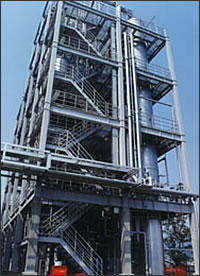
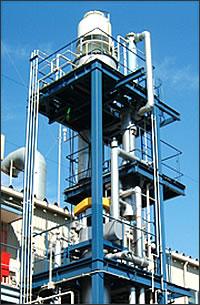
Methanol refinement systems, amyl alcohol refinement systems, ethanol refinement systems, hexanol distillation systems, propanol refinement systems, cyclohexanol distillation systems, isopropanol dehydration systems, ethylene glycol recovery systems, and butanol distillation systems.
FORE:But of all the parties which remembered their wrongs and indignities, the Roman Catholic clergy were the most uncomplying and formidable. They had seen the Pope seized in his own palace at Rome, and forced away out of Italy and brought to Fontainebleau. But there the resolute old man disdained to comply with what he deemed the sacrilegious demands of the tyrant. Numbers of bishoprics had fallen vacant, and the Pontiff refused, whilst he was held captive, to institute successors. None but the most abandoned priests would fill the vacant sees without the papal institution. At length Buonaparte declared that he would separate France altogether from the Holy See, and would set the Protestant up as a rival Church to the Papal one. "Sire," said the Count of Narbonne, who had now become one of Buonaparte's chamberlains, "I fear there is not religion enough in all France to stand a division." But in the month of June Buonaparte determined to carry into execution his scheme of instituting bishops by the sanction of an ecclesiastical council. He summoned together more than a hundred prelates and dignitaries at Paris, and they went in procession to Notre Dame, with the Archbishop Maury at their head. They took an oath of obedience to the Emperor, and then Buonaparte's Minister of Public Worship proposed to them, in a message from the Emperor, to pass an ordinance enabling the archbishop to institute prelates without reference to the Pope. A committee of bishops was found complying enough to recommend such an ordinance, but the council at large declared that it could not have the slightest value. Enraged at this defiance of his authority, Buonaparte immediately ordered the dismissal of the council and the arrest of the bishops of Tournay, Troyes, and Ghent, who had been extremely determined in their conduct. He shut them up in the Castle of Vincennes, and summoned a smaller assembly of bishops as a commission to determine the same question. But they were equally uncomplying, in defiance of the violent menaces of the man who had prostrated so many kings but could not bend a few bishops to his will. The old Pope encouraged the clergy, from his cell in Fontainebleau, to maintain the rights of the Church against his and its oppressor, and thus Buonaparte found himself completely foiled.
Hexane distillation systems, tall oil distillation systems, benzene distillation systems, lubricating oil refinement systems, xylene-free distillation systems, low-boiling gas distillation systems, ethylbenzene recovery systems, fusel oil distillation systems, naphthalene distillation systems, propylene recovery systems, and turpentine oil distillation systems.
FORE:Meanwhile Ministers, anxious to exonerate themselves from the odium so fully their due for fomenting insurrection, commenced Parliamentary inquiries which only the more clearly demonstrated their guilt. On the 2nd of February the celebrated green bag was sent down by the Prince Regent to the Lords, and another green bag on the following day to the Commons. These green bags¡ªor rather, this green bag, for they were classed as one by the public, their contents being one¡ªmade a great figure in the newspaper comments of the time. They were stuffed with documents regarding the late extraordinary powers assumed by Ministers, and the occurrences in the midland counties which had been held to justify them. No doubt the papers had been carefully selected, and they were now submitted to a secret committee of each House, which, being named by Ministers, was pretty sure to bring in reports accordingly. On the 23rd the Lords' committee brought up their report, and on the 27th the Commons' produced theirs. As might have been expected from their parentage,[134] there was a striking likeness in the offspring of the committees; they were veritable twins. Both travelled over the same ground; the statements made by the secret committee of 1816 averring that schemes of conspiracy were in agitation, and the events of 1817, particularly in Derbyshire and Yorkshire, as fully confirming these averments. They were compelled, however, to confess that the insurrections, though clearly connected in different counties, in Lancashire, Yorkshire, Derbyshire, and Nottinghamshire, were not very formidable, and that the mass of the population in these counties did not at all sanction, much less second, such proceedings. Yet, notwithstanding this confession, the fact remained that under the arbitrary measures of Ministers a great number of persons had been thrown into prison, against whom no charge could be established; and that at Derby three had been executed, and twenty others transported or imprisoned for long terms, and these, every one of them, through the acts and incitements of the emissaries of Ministers themselves. On the motion for printing the report of the Commons, which, of course, justified Ministers, Mr. Tierney said it was scarcely worth while to oppose the printing of "a document so absurd, contemptible, and ludicrous."
Ether distillation systems, camphor distillation systems, epichlorohydrin distillation systems, aniline distillation systems, dioxane refinement systems, acetonitrile distillation systems, furfural refinement systems, formalin distillation systems, cyclohexane distillation systems, monoethanolamine rectification systems, polyglycol ether distillation systems, dimethylformamide recovery systems, acrylic glycol ether distillation systems, acrylonitrile refinement systems, acetone recovery systems, pyridine distillation systems, methyl ethyl ketone recovery systems, picoline distillation systems, methyl isobutyl ketone recovery systems, and acetaldehyde recovery systems.